
07:43 AM | 15 Jul 2025 | By Admin
Mind On Replay? Overthinking?
🧠 Overthinking: Breaking the Loop
You're not alone — and you're not stuck.
🌪️ The Thought Spiral
It starts with one small thought.
Then another.
And another.
Before you know it, you’re 30 minutes into mentally replaying a 10-second moment.
“What if I embarrassed myself?”
“Why did I say that?”
“What if it all goes wrong?”
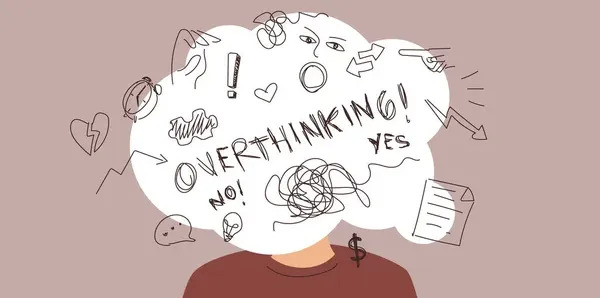
This is overthinking. It feels like control — but really, it's mental clutter wearing a disguise.
🔍 What Actually Is Overthinking?
Psychologists call it rumination: when you replay past situations, imagine worst-case futures, or analyze things way past the point of clarity.
It looks like:
-
“What if?” spirals
-
Over-preparing for simple tasks
-
Rehashing conversations
-
Fear of decisions
-
Mental ‘rewind + fast-forward’ loops
It’s not reflection. Reflection brings insight.
Overthinking just brings exhaustion.
⚠️ Why It’s a Problem
Your brain treats those thoughts like they’re real threats.
-
Stress hormone cortisol rises
-
You feel anxious, tired, and stuck
-
You delay action because your mind is overloaded
-
Your creativity and confidence suffer
Worst of all: You don’t get clarity.
You get paralysis.
🔁 Triggers That Pull You Into the Loop
Overthinking often starts when you:
-
Fear failure or making the “wrong” choice
-
Feel insecure in social situations
-
Try to predict every possible outcome
-
Compare yourself constantly
-
Feel out of control
The common thread? Uncertainty.
And your brain doesn’t like uncertainty — so it overthinks to fill the gap.
🧭 So... How Do You Break the Loop?
Not by yelling “Stop!” at your thoughts (tried that — didn’t work 😅).
Instead, interrupt the pattern.
Here are real strategies that work:
✅ 1. Name the Thought
Label it:
“Ah, I’m overthinking again.”
“This is a ‘control’ spiral.”
“This isn’t helping.”
Naming it creates mental distance. You're not your thoughts — you're the observer.
✅ 2. Use the 5-Minute Rule
If you can do something about it, take one small step.
If you can’t, give yourself 5 minutes to worry... then stop.
Create a time boundary — not every thought needs 3 hours of your life.
✅ 3. Move Your Body, Not Your Thoughts
Overthinking is a mind-loop. Break it with physical action:
-
Go for a walk
-
Stretch for 5 minutes
-
Clean a small space
-
Change your environment
Motion shifts focus. It grounds you back in reality.
✅ 4. Switch from “Why” to “What Now?”
Instead of:
“Why did I say that?”
“Why do I always mess up?”
Try:
“What can I do next time?”
“What would help me feel better now?”
“What” is action. “Why” is rumination. Choose wisely.
✅ 5. Practice Thought Flipping
Take the fear thought → challenge it.
❌ “Everyone thinks I’m awkward.”
✅ “I felt awkward, but no one probably noticed. People forget fast.”
Reframing isn't lying — it's liberating.
🧘♀️ Final Thought: You Are Not Your Thoughts
Your mind is a storyteller.
Sometimes it tells horror stories.
That doesn’t make them true.
Overthinking is just your brain’s way of trying to protect you — it just doesn’t always know how.
🌤️ Instead of Fighting Your Mind…
Try befriending it.
Breathe. Move. Reframe. Act.
That’s how you break the loop — gently, consistently, and with compassion.